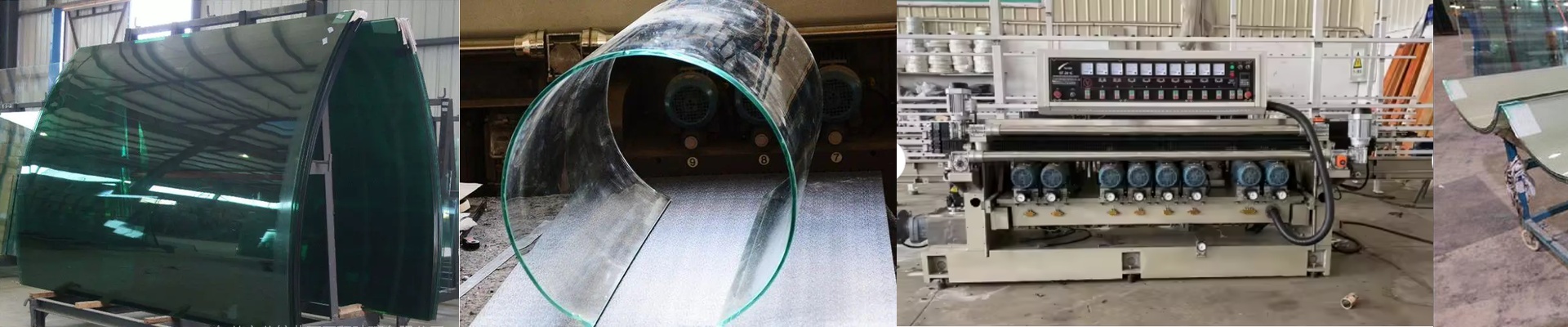

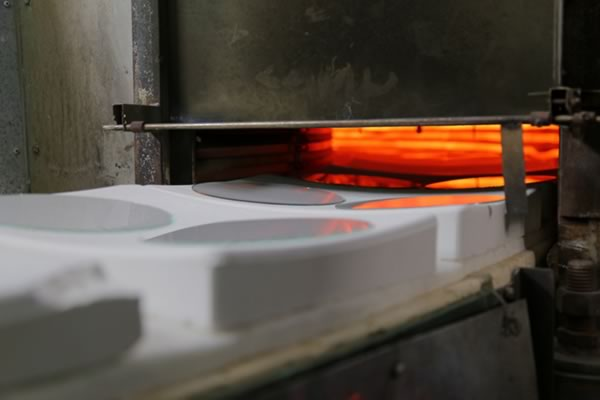
On the glass line, heat is more than temperature. It’s timing, uniformity, and control. If the furnace ramps slow, the whole schedule slips. If the thermal field drifts, you get uneven temper, wavy bends, or stress fractures that don’t show up until hours later in inspection. In tempering, the quench has to follow immediately after heating. In bending, the sag profile has to hold steady across the glass surface. In lamination, the polymer needs to hit the right flow without scorching the interlayer. A lag in heating response, or a hot spot that throws the profile off, costs seconds per cycle and scrap that lands straight on the bottom line. Fast-response infrared radiators were built for that reality. They deliver rapid, directional heat with tight thermal control, so the glass gets the profile it needs exactly when it needs it—no waiting around for the entire chamber to catch up.
What matters, technically
These radiators are usually short-wave quartz infrared emitters, chosen because they heat fast and cool fast. The core is a quartz envelope housing a high-temperature resistance element. Quartz transmits strongly in the near-infrared band, which glass and many coatings absorb readily. That means direct energy transfer with minimal delay from convection. Response time is the standout metric. From cold start to full output, these emitters hit operating temperature in seconds, and they cut back in seconds when the control signal changes. That speed translates into tighter tracking of the process curve—especially critical in tempering and bending, where the heating segment has to match the glass movement. Power density and spectral output are engineered around how glass absorbs energy. Short-wave infrared delivers high peak power in a compact footprint, so you can set up concentrated zones for edge heating or targeted coating drying without overheating adjacent areas. The result is a thermal field you can shape to the glass geometry, instead of forcing the job through a big, slow furnace mass. Uniformity comes down to emitter spacing and reflector geometry. Reflectors focus energy where you want it, cutting stray heat and limiting variation across the glass surface. And uniformity directly affects stress control: a consistent thermal profile reduces thermal stress gradients, lowering the risk of fracture during quench and during stress relief cycles. Durability in a glass plant isn’t optional. Quartz emitters handle repeated thermal cycling, and the fixtures need to survive vibration and heat on continuous lines. We specify power terminals, mounting brackets, and lead-wire insulation to match industrial duty cycles. In practice, that means fewer unplanned stops to swap heating modules. Energy use is driven by conversion efficiency and the ability to turn off quickly. Because the radiator heats on demand and idles at low power, energy spend tracks the process itself, not the furnace mass. On high-throughput lines, that difference shows up as lower kWh per square meter of processed glass.
Why this works where we run it
In tempering, the heating phase has to be fast and even before the glass hits the quench. Fast-response infrared shortens the ramp, tightens the soak, and shrinks the gap between heating and quench. That improves cycle time and gives you a more consistent compressive stress profile across the sheet. It also gives you flexibility to run thinner glasses or coated glasses without overheating the surface, which helps keep optical quality in spec. In bending, the glass has to reach a precise contour without sagging too far or too little. Infrared radiators make localized heating possible, following the bend line so you can control sagging and improve shape repeatability. When the bending tool changes, the thermal profile can change with it because the emitters respond quickly to the new setpoint. That cuts changeover time and reduces scrap from mis-bent parts. For stress relief and annealing, the goal is a controlled thermal path that removes residual stresses without introducing new ones. Infrared heating gives you a clean, repeatable curve that tracks the stress-relief schedule closely. The rapid response prevents overshoot that can create new thermal stress, and the focused heat keeps the profile stable through the critical cooling segment. In coating drying and curing, the challenge is removing solvents or driving crosslinking without blistering the surface. Short-wave infrared penetrates the wet layer and promotes uniform drying from within, reducing skinning that traps volatiles. Fast response lets the system hold the critical temperature window precisely, improving yield on sensitive low-E and solar control coatings. In lamination, the interlayer has to flow and bond without voids or edge dry-out. Infrared provides rapid, controlled heat that can be staged across the press cycle, getting the polymer to the right viscosity quickly and holding it long enough for encapsulation. The quick cool-down after bonding helps set the edge seal fast, supporting consistent optical clarity and adhesion. For insulating glass sealing, the secondary sealant needs a controlled heat profile so it cures without overheating the primary seal. Infrared heating can be zoned to address edge sealing without raising the temperature of the interior gas space, preserving spacer integrity and desiccant performance. Across these processes, the gains are measurable: shorter ramp-up, tighter profiles, fewer scrap sheets, and less energy spent heating equipment instead of the glass.
The practical details you can’t skip
Fast-response infrared radiators are straightforward to integrate, but they demand respect for what the glass line actually throws at you. Mounting and alignment directly impact uniformity. Emitters need to be positioned so the reflected energy profile covers the target zone without hot streaks. If the reflector geometry is mismatched to the glass width or line speed, you’ll see edge peaks or center dips in the thermal field. Plan the layout around the specific glass thickness and emissivity you’re running. Control strategy matters. These radiators perform best with closed-loop control that tracks glass temperature, not just emitter power. Use pyrometers or thermal imaging where you can, and tune the PID to match the fast response. Overly aggressive tuning causes oscillations that show up as wavy temper or inconsistent bend profiles. Clearance and cooling are real constraints. Infrared radiators run hot, and nearby components—seals, cables, sensors—need shielding or spacing. Airflow or water-cooled fixtures can help manage the local environment, but the cooling setup has to be designed so it doesn’t create drafts that disturb the thermal profile. Compatibility with existing equipment is usually straightforward, but not universal. If you’re replacing legacy emitters, verify voltage, wattage density, mounting dimensions, and connector types. Some OEM modules have proprietary interfaces; in those cases, a drop-in retrofit may need minor bracket changes and control wiring adjustments. Maintenance is modest, but it needs a schedule. Inspect quartz envelopes for devitrification and contamination that reduce output. Clean reflectors periodically to keep the energy focused. Keep spares on hand for quick swaps during planned downtime. That simple discipline keeps the line running at steady yield without surprise stoppages. And safety plus operator training are essential. Infrared radiation is invisible, and the temperatures are high—lockout/tagout procedures and the right PPE matter. A short training session on emitter handling, thermal inspection, and safe replacement reduces risk and protects both people and equipment. If you run tempering, bending, lamination, or coating lines, the heating system isn’t background noise—it sets the pace. Fast-response infrared radiators give you the control and speed needed to hit cycle targets, keep stress profiles consistent, and hold quality shift after shift. The payoff is fewer scrap sheets, predictable throughput, and a heating method that moves at the speed of glass.