Dealing with those annoying cold spots in complex glassware
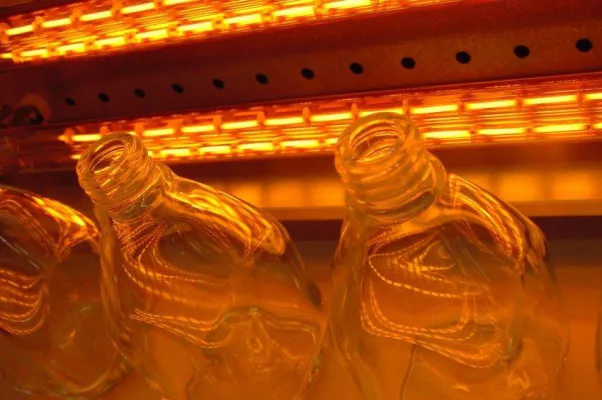
If you’ve ever worked with oddly shaped glassware, you know the headache of “cold spots.” You put everything in the annealing kiln, but because the shapes are irregular, the heat just doesn’t hit every corner. Most kilns rely on heating the air, but air is lazy—it misses the deep recesses and the tight necks. That’s where things crack. We stopped fighting the air and started using quartz halogen emitters. Instead of waiting for the air to warm up, we use short-wave infrared (SWIR) radiation. Think of it like the difference between standing in a warm room and feeling the sun hit your skin on a cold day. The heat goes straight into the glass, regardless of how weird the shape is. By angling these tubes from a few different directions, we can finally reach those stubborn spots in a flask or a narrow neck. No more internal stress, no more surprise cracks during cooling. The gear behind it We use high-purity fused quartz for these emitters because, frankly, they have to survive a lot of heat. We also rely on the halogen cycle. It keeps the tungsten filament from gunking up the inside of the tube, which means you get a steady, reliable heat output for thousands of hours without having to mess with it. On the floor, you’ll usually see these with R7s or SK15 connectors. They’re designed for quick swaps so you aren’t wasting half your shift on maintenance. And if you’re running longer, high-wattage tubes, we usually bump the voltage to 400V. It keeps the heat dense enough to do the job without blowing a fuse or overloading your current. A few things to watch out for Here’s the catch: short-wave IR is fast. Like, really fast. The heat hits the target almost instantly, which means you have to be careful with your PID controllers. If you aren’t dialed in, you’ll overshoot your annealing point before you even realize it. You also need to make sure your sensors are actually looking at the glass surface, not just the air around it. Otherwise, you might accidentally cook a section of your piece. Plus, these lamps put out a massive amount of concentrated heat when they’re running wide open, so make sure your fans and vents can actually handle the dump.