Getting Infrared Heating Right for Silk-Screened Glass
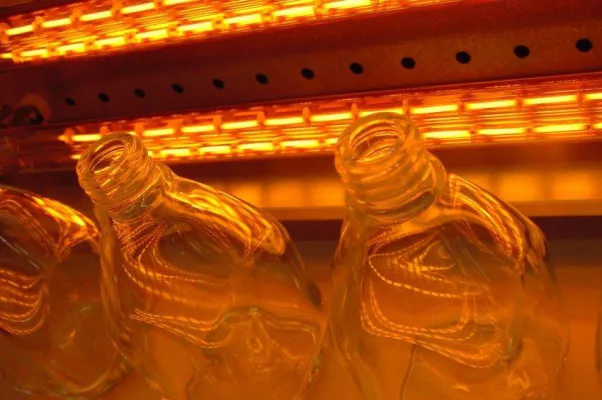
If you’ve ever worked with integrated glass finishing, you know the headache. It’s a constant tug-of-war. On one side, you need to cure the silk-screen ink. On the other, you have to temper the glass. If you crank the heat too high or too fast, the ink bleeds or burns, and your crisp patterns turn into a blurry mess. But if you play it too safe? You won’t hit the tempering temperature, and you’re left with glass that’s way too fragile. The trick is using short-wave infrared lamps that actually give you control over the thermal flux. Keeping your patterns sharp The goal is simple: hit the ink’s curing point without cooking the glass surface. We use high-wattage quartz lamps because they concentrate energy in that short-wave spectrum. It lets the heat punch through the ink layer fast. But here’s the thing—you need a tight power-to-length ratio. If your lamps are spaced too far apart, you’ll see “zebra stripes.” Those are the cold spots where the ink stays wet and the glass just doesn’t temper. Not a great look. The gear and the stress Industrial ovens are brutal. That’s why we build these lamps with high-purity quartz—they can handle the constant heating and cooling cycles without giving up. The filaments are designed to stay steady. No weird thermal spikes, which means no weird discoloration in your ink. Just a heads-up: make sure your voltage and wattage match your transformer’s output exactly. If they don’t, you’re looking at premature burn-outs or heat that just isn’t soaking in. The real-world trade-off High-intensity IR lamps are fast. Really fast. And that’s great for your throughput, but it puts a lot of pressure on your cooling systems. When you run these at full tilt, the ambient temperature inside the oven climbs. This is where your exhaust fans come into play. If the air isn’t moving, heat builds up around the glass and you lose those sharp edges on your screen-printing. It’s all about finding that sweet spot between radiation and convection.