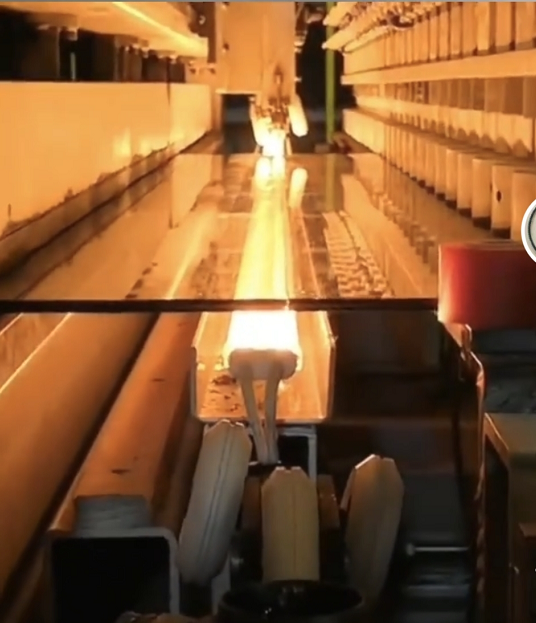
On the line, the curing cycle sets the tempo. When insulating glass units stack up, a sealant dryer that’s slow or uneven stalls the whole flow—and you start worrying about trapped moisture and callbacks. We built our window glass sealant dryer to handle that pressure, with repeatable heat control right where it matters. What matters under the hood We run short-wave infrared emitters in a focused, reflector-guided pattern. The spectral output is tuned to the sealant’s absorption profile, so you drive surface temperature fast without scorching the glass edge. You get a quick, stable thermal profile with minimal convection, which keeps the bead curing consistently. Power density is matched to line speed, and the heater array can be zoned to match tricky spacer geometries. The emitter housing is quartz, chosen for high thermal shock resistance and stable emissivity over long production runs. Why this approach fits the process With insulating glass, you have to dry the primary sealant and drive the secondary seal without inducing thermal stress. This dryer targets the sealant, not the glass, which helps keep stress fractures out of tempered or heat-strengthened lites. The fast response shortens cycle time, so you can push more units per shift without compromising edge seal integrity. Energy use drops because heat is delivered on demand, not wasted heating ambient air. It also drops into existing sealing lines cleanly, with standardized mounting and control interfaces that don’t make operators relearn the basics. Here’s the thing: short-wave IR is line-of-sight, so emitter-to-work distance and angle have to be set exactly. Plan a short commissioning run to dial in the profile for your spacer and sealant chemistry. In dusty environments, reflectors and quartz components need periodic inspection to keep output steady. Once the setup is locked, the process window is narrow but stable—treat it like any critical thermal station, and it will keep the line moving.