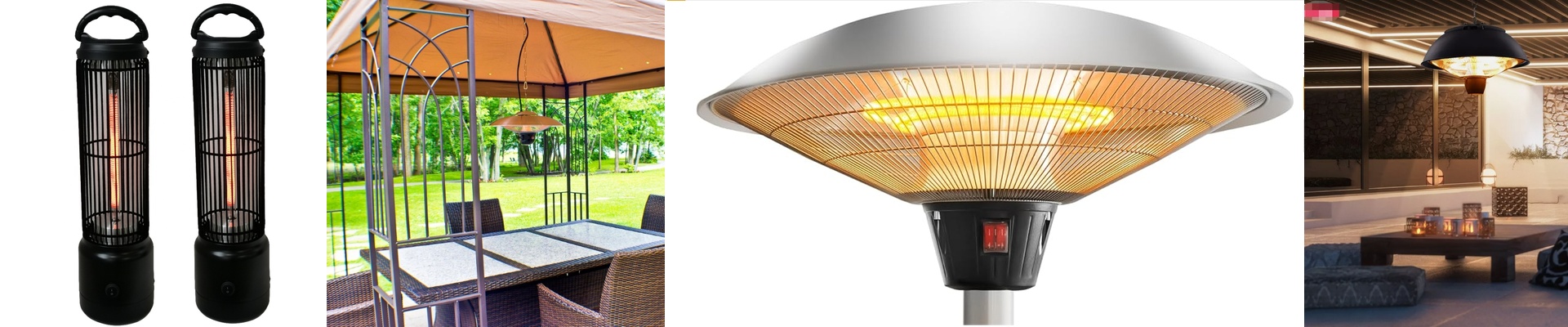
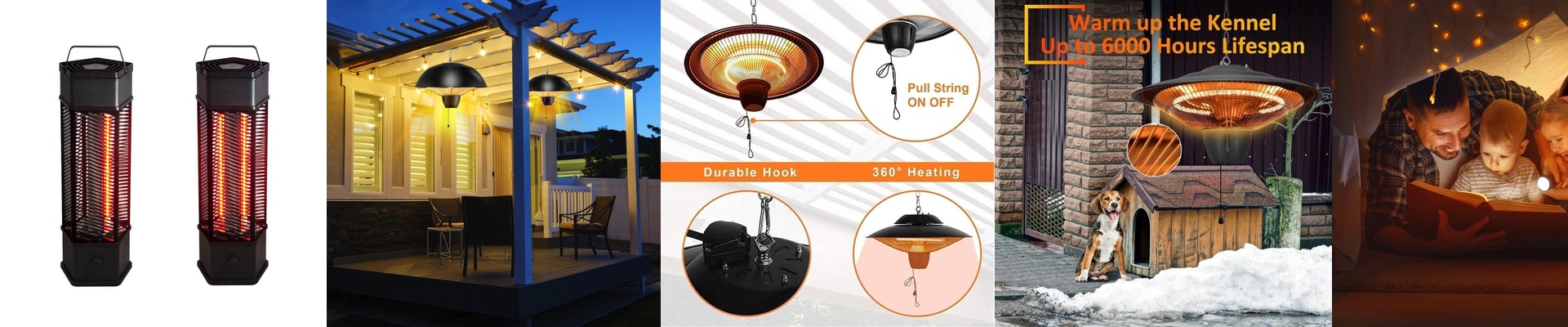
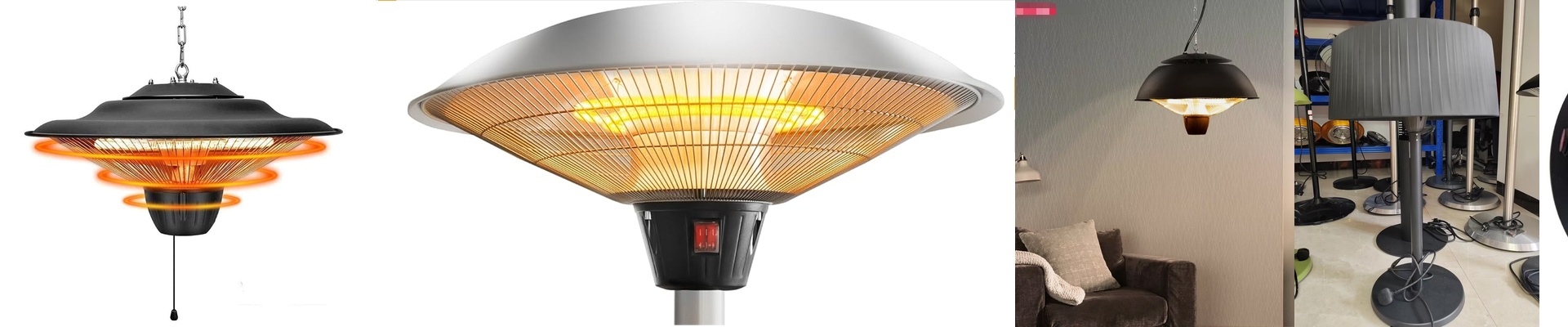
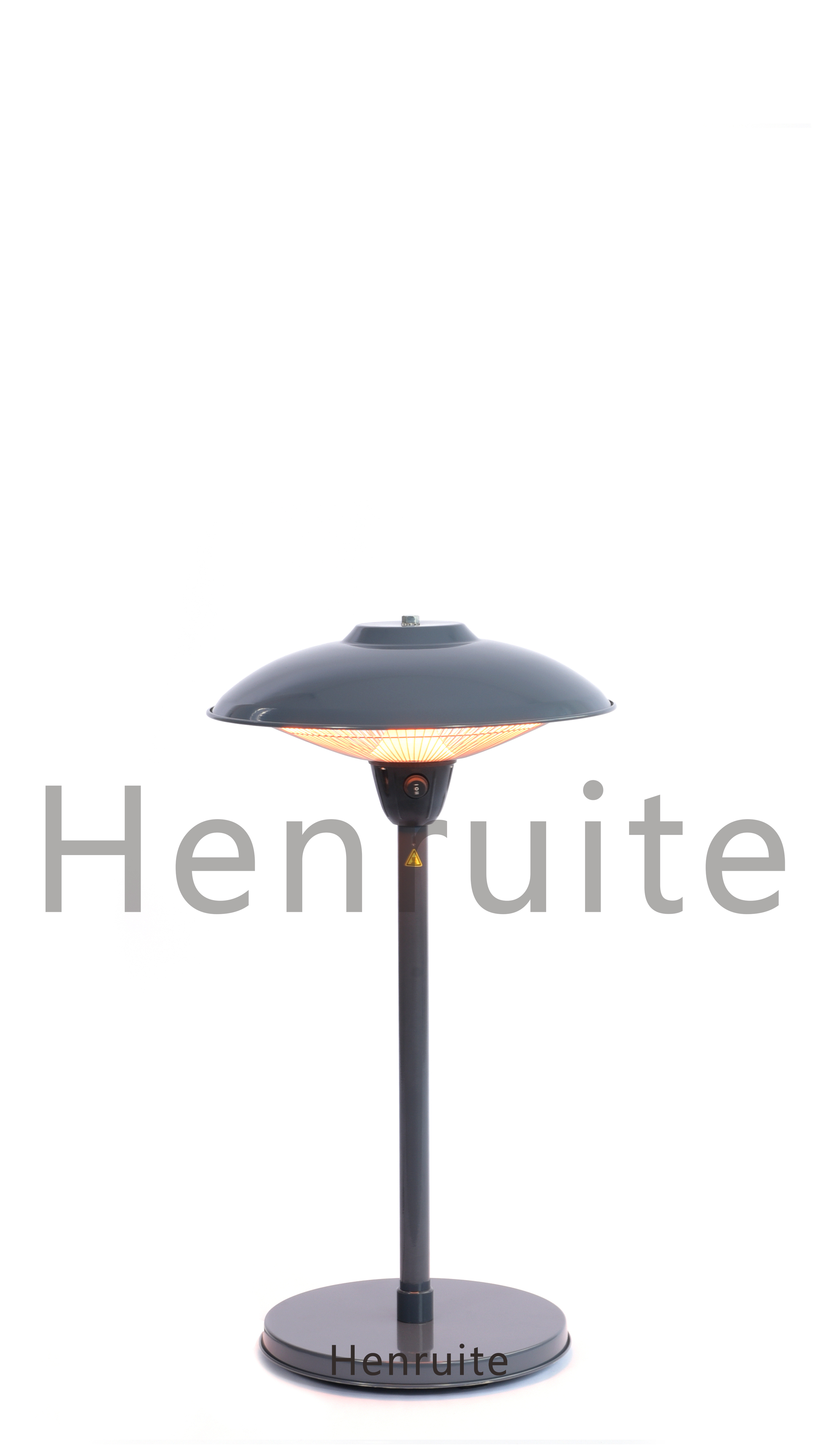
Outdoor evenings can turn cozy in a heartbeat—then take a sharp turn into chilly. The air bites, conversations die down, and people start hunting for jackets. A hanging patio heater stops that slide. It doesn’t try to heat the whole atmosphere; it warms people and surfaces directly, the way radiant heat does.
What’s actually going on under the hood
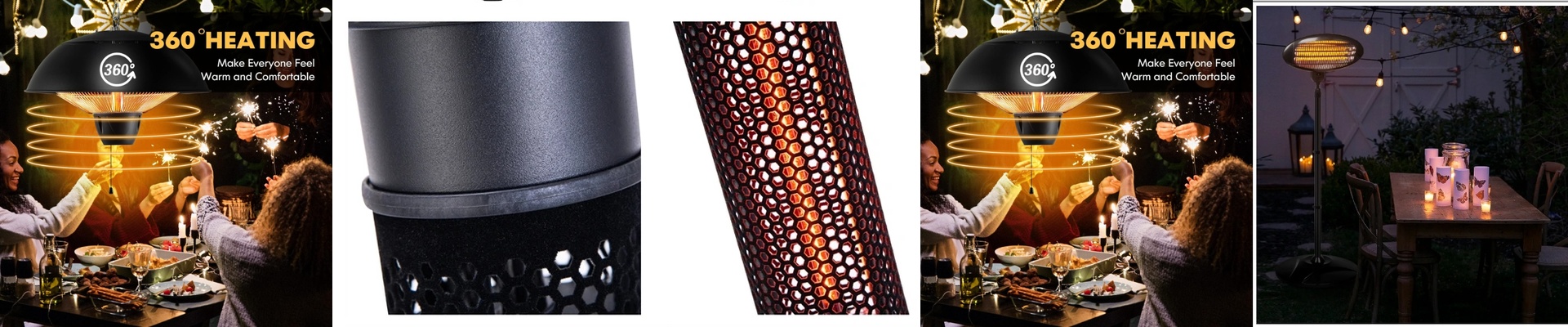
We built this hanging patio heater around infrared radiant heat, using a carbon fiber heating element inside a quartz tube. The warmth hits fast and spreads outward, more like standing in sunlight than waiting for air to warm up. It puts out 1500W and runs on a standard 120V household circuit, so you can plug it into an outdoor outlet without rewiring. A built-in thermostat keeps comfort steady, and tip-over protection shuts the unit off if it gets bumped. The IP rating is IP34, so it’s protected against splashing water from any direction—solid for covered patios and screened porches.
Why this approach works in real outdoor spaces
This design is at home where open-air living meets weather that won’t make up its mind. Infrared warmth targets people, furniture, and the floor, so you feel heat within seconds even when a breeze is moving through. That means fewer interruptions, more relaxed seating, and a longer stretch of evening use. The carbon fiber element comes up to temperature quickly and holds it evenly, which helps avoid the on-off jolts you get with some heaters. For you, that’s steady, quiet heat that makes outdoor dinners, family chats, and weekend gatherings feel less like a chore.
The practical details that matter
Installation is straightforward, but placement is where the job is won. Hang the unit at least 7 feet above the floor, and keep it 3 feet from walls, drapes, and other objects for safe clearance. For comfort, position it above or slightly behind seating so the warmth spreads across the area. This heater is meant for covered outdoor spaces—direct rain exposure isn’t recommended. When you get the location right and set the thermostat where you want it, you get consistent warmth without turning your patio into a noisy wind tunnel.