Getting the Heat Right: Why 0.1°C Matters for Lab Glass
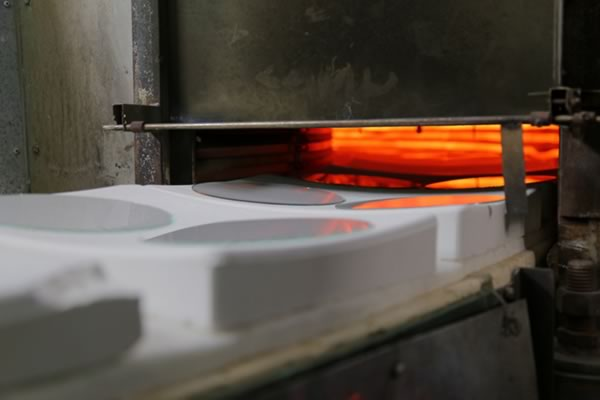
When you’re annealing lab glassware, you’re basically playing a high-stakes game with thermal gradients. If your heating element swings by even a few degrees, you’re not just risking a mistake—you’re locking in internal stress. That’s why we use long-life infrared tubes with 0.1°C precision. It’s about stopping those nasty stress fractures before they even start.
Dealing with the “Ticking Time Bomb”
Glass doesn’t just melt and set. It goes through a transition. To get through that annealing point without leaving permanent tension in the material, the temperature has to drop in a very steady, linear way. Here’s the problem: standard IR lamps love to overshoot the target. If you can keep that tolerance to 0.1°C, the glass stays in the “plastic zone” long enough for the molecules to actually settle. Without that, you end up with a “ticking time bomb.” The vessel looks perfect today, but the moment you put it under a vacuum tomorrow?Crack.
The Gear Behind the Stability
You can’t just buy a fancy PID controller and call it a day. The IR tube itself has to be consistent from one end to the other. We use high-purity quartz or special coatings to make sure the heat flux is uniform. Because if one end of the tube is running hotter than the other, you’ve just created a temperature gradient across your glassware. And that gradient is exactly what we’re trying to kill.
The Trade-off
Now, this kind of precision isn’t free. It takes up more “headroom” in your process. To keep things stable at 0.1°C, you can’t just blast the tube at full wattage. You have to run the elements at a partial load or use pulse-width modulation (PWM). This means your power supplies need to be beefy enough to handle the switching frequency, or you’ll burn out your electrical components way too soon. It’s a simple choice: you give up a bit of raw heating speed to get a piece of glass that actually holds up.